



With an increasingly globalised market, it has become more pivotal to provide cross-cultural analytics of the different markets conducting international business. Thus, this paper aims to study demographic and socioeconomic variables inherent when conducting a cross-cultural analysis of consumer needs when patronising retailing fashion design entrepreneurs in Germany and South Africa. The primary problem was identified when the research team tried to match German and South African demographics and socioeconomic variables. A discrepancy in variables was recognised, delaying an appropriate cross-cultural analysis. Currently, fashion design entrepreneurs are becoming increasingly interested in the global market. Consequently, this research intends to provide information about consumer differences between one of the Southern African economies and one of the central European economies. Hence, this paper recognises that it does not need to compare „apples with apples” but instead acknowledges that cross-cultural analytics are still possible in different societies if similarities are not forced but rather acknowledged and appropriately managed. As a result, the diverse demographic and socioeconomic variables identified when conducting a cross-cultural analysis between German and South African consumers patronising fashion design entrepreneurs were scrutinised, and necessary recommendations were provided. Accordingly, the main question interrogated in this paper is that of demographic and socioeconomic differences between Germany and South Africa. Secondly, the question related to how bias can be avoided when comparing demographic and socioeconomic variables between Germany and South Africa is studied. Finally, the question connected to German consumers’ characteristics and levels of patronage towards retailing fashion design entrepreneurs was addressed. The empirical data was collected through quantitative measures, through a survey and from 469 respondents in Germany. The findings indicated that construct, method and item biases all needed to be carefully considered for a cross-cultural analysis between Germany and South Africa. Secondly, the results revealed that the profile of consumers patronising retailing fashion design entrepreneurs in Germany as highly educated millennial females with an upper-middle-income living in metropolitan areas with no children. Finally, it was found that just over 10% of the population patronised retailing fashion design entrepreneurs in Germany.
1 Introduction
Fashion is one of the most globalized markets; Statista (2021) reported a fashion revenue of over €700,000m; Germany ranked sixth with over €25,000m, and South Africa ranking fifty-fourth with over €750m (which is over R1,200m). These figures highlighted significant differences with respect to size between the two markets.
In this paper, we debate essential factors to consider when researching cross-cultural differences between German and South African consumers, specifically with respect to those consumers interested in fashion products designed and produced by entrepreneurs in the retail-clothing environment. To achieve success in the global retail market, this paper assumes that it is essential for fashion design entrepreneurs to understand cross-cultural factors influencing consumer decisions.
The primary problem was identified while preparing to research cross-cultural differences between German and South African consumers patronizing retailing fashion design entrepreneurs. The demographic and socioeconomic variables considered for this paper were initially based on the German market; it soon became clear that utilizing the same variables would not holistically address the South African market. Considering the differences in demographic and socioeconomic variables, an initial empirical study was conducted in Germany to establish the primary differences and biases which needed consideration for cross-cultural analysis. Subsequently, this paper’s main aim is to evaluate the difference in demographic and socioeconomic variables between Germany and South Africa to appropriately conduct a cross-cultural analysis of consumer needs to patronize retailing fashion design entrepreneurs. With that in mind, the objective of this paper is to identify the different cross-cultural biases that could potentially occur between the diverse demographic and socioeconomic variables recognized. As a result, the following research questions are addressed in this paper:
(1) What are the demographic and socioeconomic differences between Germany and South Africa?
(2) How can bias be avoided when comparing the different demographic and socioeconomic variables between Germany and South Africa?
(3) What are the demographic and socioeconomic characteristics of people patronising fashion retail entrepreneurs in Germany?
(4) What is the percentage of German consumers willing to patronise retailing fashion design entrepreneurs?
The bias and equivalence frameworks discussed in the literature review (section 2) were studied in order to outline the apparent and potential demographic and socioeconomic differences between Germany and South Africa.
2 Literature review
Cross-cultural analysis assists the process of investigating, developing and comparing different cultures (Gallagher and Savage 2013, p. 1029). At the same time, the bias and equivalence framework guides the process of identifying potential systematic errors and quality inferences in cross-cultural studies (van de Vijve 2018, p. 4). Equivalence is generally at the opposite end of bias; thus, bias is reduced when an investigation is more equivalent (Symen et al. 2017, p. 3). Fundamentally, equivalence and bias address methodological challenges in cross-cultural studies, with the primary aim being to reduce bias and ensure a sufficient level of equivalence (He and van de Vijver 2012, p. 3).
By definition, an instrument is biased when cross-referenced scores have different psychological meanings that have not been considered (van de Vijver 1998, p. 43). Equivalence, on the contrary, is defined as the ability to demonstrate the actual differences in psychological meanings of cross-referenced scores (Fernández and Abe 2018, p. 5). Bias can be distinguished as either construct bias, method bias or item bias, while equivalence can be characterized as construct inequivalence, structural and functional equivalence (van de Vijve 2018, p. 5-8; Schultz et al. 2014, p. 269). Generally, bias addresses the implications of systematic error, and equivalence is more applicable at the measurement level, where scores obtained from different countries are compared (He and van de Vijver 2012, p. 5).
Since data from South Africa has not yet been collected, the literature review will only focus on the bias framework to identify potential systematic errors that could occur in the cross-cultural analysis between South Africa and Germany. Firstly, construct bias will be discussed in this section, followed by method bias which includes sample bias, instrument bias, and administrative bias. Lastly, literature related to item bias will be revised.
2.1 Construct bias
The manner in which humans comprehend the world enables them to develop mental models that are understandable to them, and those models are called constructs (McArthur 2007, p. 28). For construct bias to be avoided, different psychological meanings associated with specific variables must be considered by acknowledging that particular constructs cannot wholly overlap in certain cultures (He and van de Vijver 2012, p. 5). Therefore, for this paper, the different retail formats need to be considered in order to determine whether there are differences in constructs that overlap across cultures.
This paper measured the difference in consumer patronage between three different retail formats. Those retailers were referred to as independent small designer brands, small corporate brands, and corporate international/national designer brands. The independent „small“ designer brands refer to fashion design entrepreneurs with (potential) access to the global markets and self-employed with registered sole proprietorship, partly or self-owned limited liability companies and partnerships (Berglann Moen, Røed, and Skogstrøm 2010, p. 181-182). Furthermore, independent „small“ designer brands are fashion design businesses pushing the global industry forward through innovative designs and new business models with the ambitions of scaling up their global businesses (Business of Fashion n.d).
The independent „small“ designer brands are differentiated from small corporate brands and corporate international/national designer brands. The small corporate brands and corporate international/national designer brands refer to retail outlets which are not independently owned, operating either as specialty stores with a narrow product offering or department stores, which categorize their (wide and deep variety) products by grouping them in similarities and brand names (Diamond et al. 2015; Lee 2010, p. 597-598). The only difference between retailers which are designated as small corporate brands and corporate international/national designer brands is their size and their ownership of the brands.
With a clear construct of independent small designer brands, small corporate brands, and corporate international/national designer brands, examples of country-specific retailers can then be provided to consumers to ensure the constructs are clear and relevant for both Germany and South Africa. For further clarity in the survey, a brief definition of independent small designer brands, small corporate brands, and international/national designer brands could be provided in brackets after the question.
Another area where construct bias occurred in this paper is connected to the target population and is discussed in further detail in the methodology section in section 3.1.
2.2 Method bias
Method bias directly addresses the empirical process through sample bias, instrument bias and administration bias (van de Vijve 2018, p. 5).
2.2.1 Sample bias
In cross-cultural studies, sample bias can occur when population groups are incorporable (He and van de Vijver 2012, p. 5). While sampling bias in intracultural studies „occurs when some members of a population are systematically more likely to be selected in a sample than others. It is also called ascertainment bias (…).” (Bhandari 2021). This paper, however, will not concentrate on ascertainment bias but rather on cross-cultural sample bias.
To avoid sample bias, it should not be assumed that the variables such as residency and education in western and non-western countries are the same (Fernández and Abe 2018, p. 9-10; He and van de Vijver 2012, p. 5). Potential sample bias between German and South African consumers was explicitly identified with the residency variable and discussed more in section 3.1. Consequently, the comparison of remote cultures will not be possible, so the sample bias identified results in unavoidable cross-cultural differences, which will then be attributed to the target construct (van de Vijver and Tanzer 2004, p. 269)
2.2.2 Instrument bias
Instrument bias can be dependent on the stimulus material, response procedures or different response styles related to the actual data collection instrument (Fernández and Abe 2018, p. 9-10). Alternatively, instrument bias occurs due to the level of familiarity with testing processes. Different cultures have different practice systems that need to be considered during the data collection process (Els et al. 2016, p. 5). Generally, instrumental bias results from the difference in the familiarity of response procedures and due to the different response styles (van de Vijver and Tanzer 2004, p. 270).
2.2.3 Administrative bias
Administration bias then addresses the communication problems encountered during the data administration process (Fernández and Abe 2018, p. 9-10). For administration bias to be reduced, communication needs and the testing conditions of respondents need to be taken into consideration during the data collection process (van de Vijver 1998, p. 46; van de Vijver 2018, p. 5). Overall, administrative bias occurs due to different social or physical administrative environments, ambiguity in instructions for respondents or administrators, and differences in the expertise of administrators (van de Vijver and Tanzer 2004, p. 270).
2.3 Item bias
When specific words or phrases associated with a culture or country are used in the data collection process, the item/s may be deemed incomprehensible to other cultures or countries, leading to reduced participation (Brouwers et al. 2017, p. 3). Item bias also emerges from poorly translated items and ambiguous items with additional traits (He and van de Vijver 2012, p. 7).
There are various cases where item bias occurred, such as with the naming tests administered across different countries, which comprised of pictures such as pretzels and beavers, which are only known in specific European countries; another example is the „famous face recognition test“, which used country-specific celebrities that were unknown in other countries (Fernández and Abe 2018, p. 11-12). It is thus vital to ensure that the items tested are familiar in both countries. In the case of this study, item bias was identified as a potential issue when it came to analysing the levels of education; again, this is discussed in section 3.1.
3 Methodology
A quantitative research approach was followed. A cross-sectional research design was chosen, which means data was collected at one particular period in time (Kumar 2014, p. 368) during the 1st quarter of 2021. The study can be categorised as descriptive because the purpose was to answer the „what and how“ questions outlined in the introduction and to define and describe the populations (McCombes 2020) in Germany and South Africa. In essence, this paper is regarded as an exploratory study, in preparation for the actual cross-cultural study between Germany and South Africa.
A quota sample size of 450 participants from Germany was set, considering the gender, income, and age, as illustrated in Table 1. Formula (1) explains how the targeted quota sample was initially set.
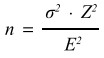
• σ = 1 ; z = 1,96 (because α= 0,05, 1 – α= 0,95) ; E= 0,1 n= 384,16 (385)
• Failure rate consideration: n*0,10 = 38,5 (39) n+ 39 = 424
• Sample size: rounded up to 450
Ultimately, 685 respondents were reached in Germany and n was reduced by 216. n was decreased due to the quality management process, which ensured that the answers obtained were of high quality; as a result, the following were excluded:
• Answers with a working time of <1/5 median.
• Unreasonable answers with no correlation.
• Respondents who did not meet the requirements of the control questions.
This resulted in a final sample of n=469 being analysed. Participation was entirely voluntary from readily available respondents, thus denoting a convenience sample (Waterfield 2018, p. 403). Convenience sampling is the prevailing non-probability approach. Units were included with unknown probabilities based on availability and opportunity through social ties of friends, colleagues, social media, and acquaintances (Vehovar et al. 2017, p. 329). In order to accomplish this, the target group was recruited through social media platforms (such as Facebook, WhatsApp and LinkedIn), real-life interaction (through relatives, friends, leisure/hobby groups, colleagues and referrals) and the internet using a poll pool-survey participation platform.
The survey was electronically administered, with the landing page explaining the purpose of the study and assuring the respondents of anonymity and confidentiality. Once the respondents had indicated informed consent, they would then proceed to the survey divided into four sections. The questions covered a series of subjects related to consumer buying behaviour (focused on shopping frequency, average money spent, information channels, shopping motivation and shopping behaviour during Covid-19), consumer needs, consumer preferences along with a consumer profile (demographic and socio-economic profile).
4 Results
The data was computed using Statistical Package for the Social Sciences (SPSS). The results demonstrated that 50% of the quota was below the required measures, while the other 50% exceeded the needed measures. In summary, the most significant number of responses were collected from women (n=50%), 25-39 years old (n=35.8%) with an income between 2.600€ and 4.499€ (n=37%). Table 1 illustrates the calculated quota sample expectations versus the actual data collected from respondents in Germany.
| Variable | Category | Expected n | Expected % | Actual % |
|---|---|---|---|---|
| Gender | Men | 225 | 50.0% | 49.0% |
| Women | 225 | 50.0% | 50.0% | |
| Diverse | 0 | 0.0% | 0.4% | |
| Age | 25-39 | 133 | 29.53% | 35.8% |
| 40-49 | 87 | 19.44% | 17.9% | |
| 50-64 | 159 | 35.36% | 30.9% | |
| 65-74 | 71 | 15.67% | 15.1% | |
| 75+ | 0 | 0.0% | 0.2% | |
| Income | 0-1.299€ | 83 | 18.40% | 14% |
| 1.300-2.599€ | 165 | 36.60% | 27% | |
| 2.600-4.499€ | 129 | 28.70% | 37% | |
| ≥4.500€ | 73 | 16.30% | 22% |
Table 1: Quota sampling
Source: Authors
Overall, all method bias and construct bias measures were identified as potential problems in this section. One of the variables often deliberated for data collection and census in South Africa is ethnicity. South Africa is known as the „rainbow nation“, meaning it is a heterogeneous country. „The government uses it [ethnicity] (…) to help readdress (sic!) the stark imbalances in income and economic opportunities that are a legacy of the official racism of the past.” (BBC News 2021). More importantly, ethnic data and census in South Africa are regarded as human capital. The data collected is perceived as imperative in informing government and private sector decision-making at all societal levels (StatsSA 2011).
On the other hand, Germany only has an estimation of national minority groups, as no population or socioeconomic census based on ethnicity has been collected in Germany since the end of World War II due to the persecution of minority groups under the Nazi regime (Federal Ministry of the Interior and Community n.d.). Another argument against „the measurement of ethnic minorities” is that the study of ethnicity could divide German citizens (Mohdin 2017). Despite that, for other minority groups in Germany, these ideas have been described as:
„Lofty principles aimed at boosting equality. But, many feel they harm racial progress (…) In a country that prides itself on the use of data and evidence, the lack of information speaks volumes. The result, says Gyamerah, is that if „you’re not counted, then you don’t count.”
With two opposing viewpoints from countries trying to rectify their discriminatory past, it is crucial to approach the collection of ethnic data in this study with sensitivity. The South African views cannot be ignored, while the German standpoint cannot go unnoticed. As a result, due to the lack of information in Germany regarding ethnicity, the variable cannot be included in the quota sampling. Regardless, it would be recommended to have a question about race in the survey and provide an option to divert from the question considering German sensitivities. Overall, while South Africa addresses ethnicity in terms of skin colour or native culture, Germany addresses ethnicity in terms of nationality (cia.gov 2022). This differentiation poses a challenge with construct bias, which requires further deliberation with the research team.
Bearing in mind that this study focuses on adding value to retailing fashion design entrepreneurs, ethnicity is considered a „relevant casual construct“ which is vital in consumer behaviour and business analysis as race separates (i) biological and physical characteristics, (ii) personality traits and (iii) cultural values and norms (Rossiter and Chan 1998, p. 127).
4.1 Demographic and socioeconomic variables
Other demographic and socioeconomic variables measured (and not part of the quota sampling) were marital status, children in the household, education and residency. According to the demographic and socioeconomic measures of the respondents (see Table 2), the majority of respondents are married (n=43.9%), with no children in the household (n=61.2%), mainly obtaining a Bachelor’s or FH-Diploma (n=30.3%), living in large cities or towns (n=29.4). Therefore, these results suggest that the consumers in Germany have combined incomes, with the majority of those households not utilising that income towards childcare. These results could be attributed to consumers with additional disposable income, a higher education, and living in urbanised developed areas. Consequently, all forms of bias need to be safeguarded, from construct bias to method bias and item bias, discussed below.
Marital status
In terms of marital status, the researchers would need to acknowledge that South African law recognises two types of marriages: civil unions and customary marriages (gov.za n.d.). A customary marriage by western culture and some Christian groups in South Africa is viewed as an engagement (Eduafo-Abraham 2019), but on the contrary, it is a lawful marriage. Thus, the construct of marital status in South Africa needs to be well defined, and that could be achieved through an additional description in brackets. For example, another delineation in brackets stating customary or civil marriages should be included with the „married’ category.
| Variable | Category | Actual % |
|---|---|---|
| Marital status | Married | 43.9 % |
| Single | 27.9 % | |
| Living in partnership | 7.2 % | |
| Divorced | 19.6 % | |
| Widowed | 1.3 % | |
| Children in household | Yes | 38.6 % |
| No | 61.2 % | |
| Education | Haupt or Realschulabschluss | 7.2 % |
| Berufsausbildung | 27.1 % | |
| Abitur | 19.0 % | |
| Bachelor or FH-Diploma | 30.3% | |
| Masters order Universitatsdiplom | 14.1% | |
| Post Abitur | 2.3 % | |
| Residency | Metropolis | 17.3 % |
| City / large town | 29.4 % | |
| Small town / village | 26.4 % | |
| Rural areas | 26.9 % |
Table 2: Demographic and sociographic information
Source: Authors
Level of education
The second bias that needs to be avoided is item bias, which is in conjunction with the level of education. The German education system is unique, with certain overlaps with South Africa occurring only in higher education. On that premise, the items used to measure the level of education need to be country-specific. Once the data is collected, matching the educational items during the cross-cultural analysis would be recommended. For example, Grundschule would be paired with primary school, Hauptschule would be paired with middle school, or Gymnasium paired with high schools, as demonstrated in Table 3. Furthermore, each educational level would need to be separated instead of grouping academic levels (for convenience), as initially done with the study in Germany. This separation would ensure that administration bias is avoided. Table 3 illustrates a complete list of grouped educational level categories according to their level of study.
| Germany Education | South Africa |
|---|---|
| Grundschule | Primary school |
| Hauptschule | Middle school |
| Realschule (not possible university entrance) | Technical school (possible university entrance) |
| Gymnasium | High school |
| Berufsausbildung (possible after Hauptschule or Realschule) | Vocational work (only after high school) |
| Diploma | |
| Degree | |
| Masters | |
| Doctorate |
Table 3: Differences in education levels
Source: Authors
Residency
The final potential bias to be deliberated in this section is method bias, specifically, sample bias concerning residency. It is important to note that residency categories such as villages and rural areas are entirely different between Germany and South Africa. Over and above that, South Africa records other residential formats, such as township and informal settlements. This particular variable, as with ethnicity, will not be comparing „apples to apples” or instead focusing on the diversity and differences between the two categories. Inevitably, when reporting on the residential areas in Germany and South Africa, the similarities are only with metropolitan areas, city/large towns and small towns. Otherwise, the rest of the sample reports cannot be matched.
4.2 Consumer patronage of retailing fashion design entrepreneurs
As the survey results are a consequence of non-probability convenience sampling and electronic administration, the data represented respondents residing predominantly in the South Western part of Germany with internet access. Thus, this indicated instrument bias, as individuals without or with limited internet access would have difficulty participating in the survey. Likewise, some generations are uncomfortable with online data collection processes, even with the surety of confidentiality and anonymity. Thus, they would have preferred offline methods. Consequently, this is one area where this research would remain limited.
Overall, the profile of consumers patronising retailing fashion design entrepreneurs in Germany was determined. It was found that the typical profile of retailing fashion design entrepreneurs supporters in Germany were female, born between 1982-1996, married or single with no children in their household, lived in cities or large towns, obtained a Bachelor’s or Master’s degree and were earning between 2.600-4.499€ (upper-middle-income group).
Unfortunately, a limited amount of 10.8% of consumers patronised retailing fashion design entrepreneurs within that target group, while 33.9% of the German population preferred to shop at small/corporate retailers. The majority of the population shopped at corporate national and international retailers. The level of consumer patronage in Germany is summarised in figure 1 below.
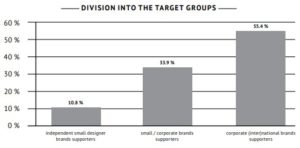
Figure 1: Division of target groups
Source: Authors
5 Conclusion
This paper has presented a descriptive account of the demographic and socioeconomic differences between Germany and South Africa. The differences shown are an exploratory study in preparation for the cross-cultural analysis between German and South African consumers and their patronage towards retailing fashion design entrepreneurs. Specifically, this paper was able to identify which types of biases could potentially challenge the cross-cultural analysis between Germany and South Africa. Fundamentally, this exploratory study would improve the reliability and validity of the final research.
In light of the findings suggested in this paper, the demographic and sociographic profiles of consumers patronising retailing fashion design entrepreneurs in Germany were identified. This paper addressed a specific research gap by providing the percentage of consumers patronising various formats of fashion retailers. Therefore, the findings presented here are practically informative for national and international fashion designers in retail to appropriately market and organise their retail businesses for the relevant consumer markets.
In terms of future work, the findings help pose a range of research questions. Firstly, questions related to „why“ consumers would prefer to patronise retailing fashion design entrepreneurs instead of other fashion retailers could be deliberated. Secondly, questions about efforts required to educate (or even persuade) consumers to patronise local retailing fashion design entrepreneurs in different cultures could be considered. Lastly, the cross-cultural differences in support required for retailing fashion design entrepreneurs to achieve greater market access could finally be researched.
Literatúra/List of References
- BBC News, 2021. Race in South Africa: We haven’t learnt we are human beings first. 2021. [online]. [cit. 2022-2-9]. Available at: <https://www.bbc.com/news/world-africa-55333625>
- Berglann, H. et al., 2011. Entrepreneurship: Origins and returns. In: Labour Economics. 2011, 18(2), 180-193. ISSN 0927-5371.
- Bhandari, P., 2021. Sampling bias and how to avoid it. Types & examples. 2021. [online]. [cit. 2022-4-7]. Available at: <https://www.scribbr.com/methodology/sampling-bias/>
- Brouwers, S. A., Mostert, K. and Sanelisiwe, V. M., 2017. Bias and equivalence of the strengths use and deficit correction questionnaire in a South African context. In: SA Journal of Human Resource Management. 2017, 15(11). ISSN 2071-078X.
- Business of Fashion. Entrepreneurship, 2022. [online]. [cit. 2022-1-23]. Available at: <https://www.businessoffashion.com/education/collection/fashion-entrepreneurship>
- Gov., 2022. Germany in World fact book, 2022. [online]. [cit. 2022-2-11]. Available at: <https://www.cia.gov/the-world-factbook/static/4447d1d6fce84499a89f0f775d8bb561/GM-summary.pdf>
- Diamond, J., Diamond, E. and Litt, S., 2015. Fashion retailing: A multi-channel approach. USA: Bloomsbury Publishing, 2015. ISBN 9781609019006.
- Edgar, T. W. and Manz, O. D., 2017. Exploratory study. In: Research methods for cyber security. 95-130. Cambridge, MA: Syngress, 2017. ISBN 9780128053492.
- Eduafo-Abraham, R., 2019. Is „Engagement“ a legal marriage? 2019. [online]. [cit. 2022-2-9]. Available at: <https://www.myjoyonline.com/is-engagement-a-legal-marriage/>
- Els, C., Mostert, K. and Brouwers, S., 2016. Bias and equivalence of the strengths use and deficit correction questionnaire. In: SA Journal of Industrial Psychology. 2016, 42 (1), 1-9. ISSN 2071-0763.
- Federal Ministry of the Interior and Community (n. d.). Community & integration: National minorities. 2022. [online]. [cit. 2022-2-9]. Available at: <https://www.bmi.bund.de/EN/topics/community-and-integration/national-minorities/national-minorities-node.html>
- Fernández, A. L., and Abe, J., 2018. Bias in cross-cultural neuropsychological testing: problems and possible solutions. In: Culture and Brain. 2018, 6(1), 1-35. ISSN 2193-8660.
- Gallagher, S. E., and Savage, T., 2013. Cross-cultural analysis in online community research: A literature review. In: Computers in Human Behavior. 2013, 29(3), 1028-1038. ISSN 0747-5632.
- Za. (n. d.). Getting married, 2022. [online]. [cit. 2022-2-9]. Available at: <https://www.gov.za/services/services-residents/relationships/getting-married#:~:text=Three%20types%20of%20marriages%20are,customary%20marriages%20and%20civil%20unions>
- He, J. and Vijver, F., 2012. Bias and equivalence in cross-cultural research. In: Online readings in psychology and culture. 2012, 2(2). ISSN 2307-0919.
- Lee, S. E., 2010. Retailing. In: The berg companion to fashion. Valerie Steele, ed. Oxford: Bloomsbury Academic. 2010, 596-599. ISBN 978-1847885630.
- McArthur, D. N., 2007. Construct equivalence in international business research: The first and the last of it. In: The Journal of Business Inquiry. 2007, 6(1), 28-38. ISSN 2155-4056.
- McCombes, S., 2020. Descriptive research design. Definition, methods and examples. [online]. [cit. 2022-2-11]. Available at: <https://www.scribbr.com/methodology/descriptive-research/>
- Rossiter, J. R., and Chan, A. M., 1998. Ethnicity in business and consumer behaviour. In: Journal of Business Research. 1998, 42(2), 127-134. ISSN 0148-2963.
- Schultz, P. W., et al., 2014. Cross-cultural evidence for spatial bias in beliefs about the severity of environmental problems. In: Environment and Behavior. 2014, 46(3), 267-302. ISSN 1552-390X.
- Statista, 2021. Fashion. 2021. [online]. [cit. 2021-1-12]. Available at: <https://www.statista.com/outlook/dmo/ecommerce/fashion/germany?currency=EUR&comparison[]=south-africa#revenue / https://www.statista.com/outlook/dmo/ecommerce/fashion/worldwide?currency=EUR#key-market-indicators>
- StatsSA, 2011. The importance of Census. 2022. [online]. [cit. 2022-2-9]. Available at: <http://www.statssa.gov.za/?page_id=3979>
- Van de Vijver, F. J. R., 1998. Towards a theory of bias and equivalence. In: Zuma Nachrichten, 1998, 3, 41-65. ISSN 0944-1670.
- Van de Vijver, F. J. R., 2018. Capturing bias in structural equation modeling. In: Cross-cultural analysis. Davidov, E., Schmidt, P. and Billiet, J., Eds. New York: Routledge Academic, 2018, 3-43. ISBN 9781315537078.
- Vehovar, V., et al., 2017. Non-probability sampling. In: The SAGE handbook of survey methodology. Wolf, C., Joye, D., Smith, T. and Fu, Y., Eds. SAGE Publications, 2017, 329-345. ISBN 9781446282663.
- Waterfield, J., 2018. Convenience sapling. In: The SAGE encyclopedia of educational research, measurement, and evaluation. Frey, B. B. Eds. Thousand Oaks, CA: SAGE Publications. 2018, Vols. 1-4. ISBN 9781506326153.
Kľúčové slová/Key words
biases, cross-cultural, retailing, fashion designers, entrepreneurship, Germany, South Africa
predpojatosti, medzikultúrny, maloobchod, módni návrhári, podnikanie, Nemecko, Južná Afrika
JEL klasifikácia/JEL Classification
M31
Résumé
Pohľad na predsudky pri meraní socioekonomiky a demografie spotrebiteľov, ktorí sponzorujú maloobchodných podnikateľov v oblasti módneho dizajnu: pohľad Nemecka verzus požiadavky Južnej Afriky
S čoraz viac globalizovaným trhom sa stalo kľúčovým realizovať medzikultúrnu analýzu rôznych trhov vykonávajúcich medzinárodný obchod. Cieľom tohto príspevku je preto preskúmať demografické a sociálno-ekonomické premenné, ktoré sú neoddeliteľnou súčasťou medzikultúrnej analýzy potrieb spotrebiteľov, ktorí sa zúčastňujú na maloobchodnom predaji podnikateľov v oblasti módneho dizajnu v Nemecku a v Južnej Afrike. Primárny problém bol identifikovaný, keď sa výskumný tím pokúsil porovnať nemecké a juhoafrické demografické a socioekonomické premenné. Identifikoval sa rozpor v premenných, čo zdržalo vhodnú medzikultúrnu analýzu. V súčasnosti sa podnikatelia v oblasti módneho dizajnu čoraz viac zaujímajú o globálny trh. V dôsledku toho je zámerom tohto výskumu poskytnúť informácie o spotrebiteľských rozdieloch medzi jednou z juhoafrických ekonomík a jednou zo stredoeurópskych ekonomík. Preto tento príspevok pripúšťa, že sa nemusia porovnávať „jablká s jablkami“, ale naopak pripúšťa, že medzikultúrna analýza je stále možná v rôznych spoločnostiach, ak sa podobnosti nevnucujú, ale skôr uznávajú a vhodne riadia. V dôsledku toho boli podrobne preskúmané rôzne demografické a sociálno-ekonomické premenné zistené pri vykonávaní medzikultúrnej analýzy medzi nemeckými a juhoafrickými spotrebiteľmi, ktorí preferujú podnikateľov v oblasti módneho dizajnu, a boli poskytnuté potrebné odporúčania. V súlade s tým je hlavnou témou skúmanou v tomto príspevku otázka demografických a sociálno-ekonomických rozdielov medzi Nemeckom a Južnou Afrikou. Následne sa skúma téma súvisiaca s prekonaním skreslenia pri porovnávaní demografických a socioekonomických premenných medzi Nemeckom a Južnou Afrikou. Nakoniec sa riešila téma spojená s charakteristikami nemeckých spotrebiteľov a úrovňou preferencie maloobchodných podnikateľov v oblasti módneho dizajnu. Empirické údaje boli zozbierané prostredníctvom kvantitatívneho merania dopytovaním 469 respondentov v Nemecku. Zo zistení vyplynulo, že pri medzikultúrnej analýze medzi Nemeckom a Južnou Afrikou je potrebné dôkladne zvážiť konštrukčné, metodické a tematické odchýlky. Po druhé, výsledky odhalili, že profil spotrebiteľov, ktorí preferujú podnikateľov v oblasti maloobchodného módneho dizajnu v Nemecku, sú vysoko vzdelaní mileniáli ženského pohlavia s vyšším stredným príjmom žijúci v metropolitných oblastiach bez detí. Nakoniec sa zistilo, že len niečo viac ako 10% populácie sa v Nemecku stará o maloobchodný predaj podnikateľov v oblasti módneho dizajnu.
Recenzované/Reviewed
18. February 2022 / 11. March 2022