



Sustainability in retail is one of the most important parts in strategic management decision making. Retailers want to be socially responsible, or to have the label „sustainable retailer”. Important is the macro area, represented by official statement. The micro area – daily sustainable activities, or decisions – is crucial, too. Stakeholders compare the statement, and a true behavior to customers, employees, society. One aspect of retailers´ sustainability is an offer of sustainable products. Listed sustainable products mean a true interest in an environmental, social, and economic development.
Consumers tend to buy sustainable products, search for information about sustainability of a retailer. Sustainability is the aspect, supporting consumers´ better feeling by different products´ consumption. Pricing of many sustainable products is similar to pricing of usual assortment. Therefore, sustainable offer is interesting for more consumers.
This paper aims to present results from marketing research in 2021. It was focused on perception of sustainable products, and interest in sustainability by different kinds of products. Which aspects are important in confirmation of sustainable products? Which kinds of products is sustainability crucial for?
Sustainability in retail
Sustainability in retail is a current topic. Retailers face a trend to support sustainability in many ways. Stakeholders require more and more an image of a sustainable retailer. They observe a supply chain, all members should be sustainable. Retailer, selling products from unsustainable supplier, is not considered as sustainable retailer. Retailer, not supporting social, economic development in region, is not sustainable retailer. Retailer, not protecting an environment, is not sustainable.
Consumers are more educated in environmental questions, and are interested in sustainability, eco-standards, and recyclable products (MacKenzie B. Gill et al. 2020). Retailers must assess the right balance between market demand, stakeholders´ expectations, and impact on their business activity (Whysall, 2008; Maignan et al. 2005). Retailers should follow the trend of sustainability, but stay efficient (Stangis and Smith 2017). Sustainability is about building foundations for future success (Hedstrom 2018), and future success is subject to profitability nowadays. Therefore, all sustainable, or CSR activities should reflect following scheme, based on Triple-Bottom Line.
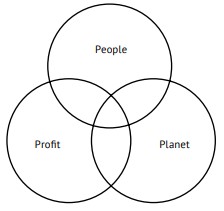
Picture 1: Triple-Bottom Line
Source: Authors according to Elkington (2018)
Triple-Bottom Line was defined by Elkington in 90´s last century (Elkington 2018). Sustainability is based on environmental, economic, and social aspects. Sustainable activities very often fill all levels together. For example, regional suppliers´ preference influence environmental protection (green logistics), economic development in a region, and higher employment (social factor). Ideal position of every sustainable activity is in intersection point of all three sets. Retailers search for sustainability in retail, related to logistics, transport, cleaner production, cutting waste out of manufacturing process, or eco-efficiency (Ruiz-Real et al. 2018). The best way to be sustainable in retail, is selling sustainable products.
What is the sustainable product? Sustainable product should follow standards, based on aspects of environmental, economic, or social development. Best of all areas. According to Ottman (2012), sustainable product, following environmental standards, should have a minimal environmental impact during production, usage and in finishing part of life cycle.
Junaedi (2005) add the aspect of no danger to people and nature, no harm animals and, no creation of waste and minimizing of negative impacts on the environment (Junaedi 2005). In decision making customers evaluate, instead of type of product, the labeling, and sustainability certification (Rupprecht et al. 2020). Sustainability is one of the most important aspects in buying decision making process. People buy sustainable products, and address the corporate social responsibility, ethical values (Arvidsson 2011). According to Annual Consumer Report (2016) around 68 million consumers from the USA based purchasing decisions on their personal, social, and environmental values, and would like to spend up to 20% more on environmentally sound products. The tendency on the market is still increasing, in the Czech Republic, too (Jaderná and Ostin 2021). Consumers think about a story of the product. They are interested in the whole production process, in the context of sustainability, too. Preferences of local products, or products with interesting story, based on social aspects, are important influences on purchasing behavior. Therefore, retailers offer more sustainable products. But, how Czech consumers feel sustainable products? And which kinds of products are evaluated by sustainable criteria?
Methodology
This paper aims to present findings of marketing research in 2021, designed when working on the grant SGS/2019/01 Jaderná at the Department of Marketing and Management at SKODA AUTO University. The marketing research was organized to identify a perception of sustainable products by Czech consumers, and their tendency to consider an importance of different kinds of products.
The survey was conducted via the internet at the beginning of October 2021 through Trendaro, which is an application operated by a professional survey company called Behavio Labs, s. r. o. A total of 1,000 respondents were chosen so that a representative sample of the Czech population was obtained. After collecting data phase, the information was transferred to Microsoft Excel for transcoding into statistically measurable quantities. This file was then statistically evaluated by chi square test, and data interpretation was done by frequency analysis, to present the trend on the Czech market.
Sustainability of retail products
Sustainability states from activities filling 3 areas of interest: environmental, economic, social. Retailers would like to follow the trend of sustainability and think about all these areas. By selling a sustainable product, aspects seen by customers are important in marketing communication. The research question is: Which aspects of sustainable products the Czech consumer see?
The picture 2 shows a dominance of environmental aspect. From 862 respondents, who did not skip this question, 464 ticked an environment. Health and quality are important aspects of sustainability for more than 120 respondents.
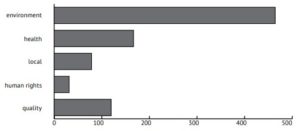
Picture 2: Aspects of product sustainability
Source: Authors
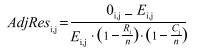
Data processing showed the dependence on gender by the answers health, and environment. First, the expected value was calculated:

Following table presents adjusted residuals. Based on values of expected results (E), and observed results (O), adjusted residuals were calculated:
| Adj.residuals | Female | Male |
|---|---|---|
| quality | 0.20659242 | -0.20659242 |
| human rights | -0.210826927 | 0.210826927 |
| local | -0.078809459 | 0.078809459 |
| health | 0.418754922 | -0.418754922 |
| environment | -0.349865336 | 0.349865336 |
Table 1: Adjusted residuals – gender + sustainable product
Source: Authors
To confirm the dependence, the z criteria were set:
Significance level = 0.05
Number of tests = 10
Adjusted sig lvl = 0.005
Z criteria = -2.807033768
An adjusted residual that is more than 2.81 indicates that the number of cases in that cell is significantly larger. These values are highlighted in the table 1. The percentages of answers by respondents in different age groups are in following table. A higher percentage was in age group 45-64 by the answer about healthy aspects of sustainable products. The same tendency was identified in 2019, in the previous marketing research organized by the same author.
| Sustainable product | Age 18-29 | Age 30-44 | Age 45-64 | Age 65+ |
|---|---|---|---|---|
| skip the question | 9% | 13% | 16% | 19% |
| environment | 52% | 47% | 44% | 42% |
| health | 15% | 16% | 20% | 13% |
| local | 6% | 8% | 9% | 7% |
| human rights | 3% | 3% | 3% | 6% |
| quality | 15% | 13% | 8% | 13% |
Table 2: Sustainable product + age groups
Source: Authors
Different kinds of product and sustainability
Consumers tend to buy sustainable products. But sustainability is not important for all kinds of products, in the purchasing decision making process. Graphs on following pictures present the importance of sustainability by fashion, food, cosmetics, electronics, and furniture.
First, sustainability of fashion products was assessed by respondents. 45% of respondents feel a sustainability as important by fashion products, 28% of respondents fifty-fifty, 12% as crucial. Only for 15% of respondents is the question of sustainability of fashion products not important.
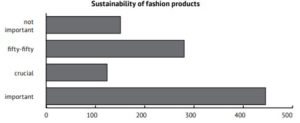
Picture 3: Importance of fashion products´ sustainability
Source: Authors
The next picture shows a visible importance of sustainability by food products. Respondents incline to buy sustainable food products. For more than 400 respondents from 1000 is sustainability important, for 260 is crucial, and only 118 respondents answered, sustainability of food products is not important. In consideration of amount of people, who feel sustainable products as healthy products, could be this tendency expected. Consumers take care about their health, and food has a big impact on health.
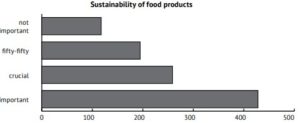
Picture 4: Importance of food products´ sustainability
Source: Authors
Graph on the picture 5 is very similar to the graph about sustainability of fashion. Answers are very similar. For only 152 respondents (15%) is sustainability of cosmetics not important, for the same number of respondents is crucial. 43% of respondents regard sustainability of cosmetics as important. Others are not sure.
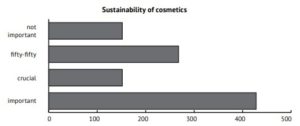
Picture 5: Importance of cosmetics products´ sustainability
Source: Authors
Results from the survey, presented in following table 2, showed that the tendency to consider sustainability by furniture or electronic is very similar. For 39% of respondents is sustainability of furniture important, for 36% by electronics. More than 17% of respondents do not feel the importance of sustainability by furniture, and electronics. 30% of respondents are not sure.
| Sustainability | furniture | electronics |
|---|---|---|
| important | 392 | 364 |
| crucial | 132 | 161 |
| fifty-fifty | 295 | 300 |
| not important | 181 | 175 |
| total | 1000 | 1000 |
Table 3: Importance of sustainability by furniture, electronics
Source: Authors
Conclusions
Consumers see the sustainability first in environmental protection. Sustainable product is, in particular, ecologic product. According to presented findings, the second most cited aspect of sustainability is health, then the quality of the product. Health, as the first association to sustainable product, is more frequently indicated by respondents in the age 45 – 64. They are more interested in their health and consider the sustainable food product more likely to healthy product.
Statistical processing of data showed that there is a significant dependency on gender by the answer environmental aspect of sustainable products, and health. Both sexes regard the environmental aspects as the first association to sustainable product. Environment is followed by health and quality.
1000 answered questionnaires pointed out the importance of sustainability by different kinds of products. Crucial is sustainability of food (26%), and only 118 from 1000 respondents do not feel sustainability of food as important. Less interest in sustainability is visible by electronics and furniture. But still the percentage of importance is high. Following table 3 presents absolute frequency by every monitored kind of product, or the number of respondents, who feel the sustainability as important, crucial, fifty-fifty, not important. It is the summary of presented findings.
| Sustainability | fashion | food | cosmetics | electronics | furniture |
|---|---|---|---|---|---|
| important | 445 | 428 | 428 | 364 | 392 |
| crucial | 124 | 259 | 152 | 161 | 132 |
| fifty-fifty | 280 | 195 | 268 | 300 | 295 |
| not important | 151 | 118 | 152 | 175 | 181 |
Table 4: Summary of findings
Source: Authors
Retail managers should follow the trend of sustainability. First, to communicate sustainability by food products. For 259 respondents is the sustainability of food crucial, and 428 consider sustainability of food as important. Less importance of sustainability is in electronics and furniture by Czech consumers. But, the number is still high, and marketing communication of sustainability can support a differentiation of a retailer from competitors.
Sustainable products are associated first to an environment. Therefore, the environmental aspect should be the major content of message to consumers by marketing communications. Health, as the second most associated aspect, is important more for women. It can influence the decision about communication of sustainable products to this segment.
Consumers in the Czech Republic are influenced by globalization, new trends on the market, and retailers´ marketing communication. Tendency to be sustainable in daily shopping, or purchasing electronics, fashion, furniture, is still increasing. Less than 20% of respondents are not bound by sustainability of different kinds of products. Less than one third of respondents is not sure. It is a good argument to follow the trend of sustainability in retail. But the question is, how to promote the sustainability? Next findings can help to communicate the sustainability on the right level, using right marketing tools.
Poznámky/Notes
This paper is one of the outcomes of the grant research SGS/2019/01 Jaderná at the Department of Marketing and Management at SKODA AUTO University.
Literatúra/List of References
- 14th Annual Consumer Report. 2016. State of sustainability in America, 2016. [online]. [cit. 2022-3-19]. Available at: <https://www.nmisolutions.com/index.php/research-reports/sustainability-reports/14th-annual-consumer-report-2016-state-of-sustainability-in-america>
- Arvidsson, A., 2011. General sentiment: How value and affect converge in the information economy. In: Sociological Review. 2011, 59(2), 39-59. ISSN 0038-0261.
- Christoph D. D. Rupprecht et al., 2020. Trust me? Consumer trust in expert information on food product labels. In: Food and Chemical Toxicology. 2020, 137. ISSN 1873-6351. [online]. [cit. 2022-4-06]. Available at: <doi:10.1016/j.fct.2020.111170>
- Elkington, J., 2018. 25 Years ago I coined the phrase „Triple bottom line”. Here’s why it’s time to rethink it. In: Harvard Business Review. 2018. ISSN 0017-8012. [online]. [cit. 2022-3-08]. Available at: <https://hbr.org/2018/06/25-years-ago-i-coined-the-phrase-triple-bottom-line-heres-why-im-giving-up-on-it>
- Hedstrom, G. S., 2018. Sustainability: What it is and how to measure it. DegPress, 2018. ISBN 1547416602.
- Jaderna, E. and Ostin, V., 2021. Certified product buying preferences under the influence of COVID-19. In: Marketing Science & Inspirations. 2021, 16(1), 46-54. [online]. [cit. 2022-4-06]. Available at: <doi:10.46286/msi.2021.16.1.6>
- Junedi, M. F. S., 2005. Pengaruh Kesadaran Lingkungan pada Niat Beli Produk Hijau; Studi Perilaku Konsumen Berwawasan Lingkungan. In: Benefit. 2005, 9(2), 189-201. ISSN 2541-2604. [online]. [cit. 2022-4-06]. Available at: <doi:10.23917/benefit.v9i2.1210>
- MacKenzie B. Gill et al., 2020. Consumer preferences for eco-friendly attributes in disposable dinnerware. In: Resources, Conservation and Recycling. 2020, 161. ISSN 1879-0658. [online]. [cit. 2022-4-06]. Available at: <doi:10.1016/j.resconrec.2020.104965>
- Maignan, I., Ferrell, O. C. and Ferrell, L., 2005. A stakeholder model for implementing social responsibility in marketing. In: European Journal of Marketing. 2005, 39, 956-977. ISSN 0309-0566.
- Ottman, J., 2013. Blog of GreenMarketing.com. GreenMarketing.com. 2013. [online]. [cit. 2022-4-06]. Available at: <http://www.greenmarketing.com/blog/P15/>
- Ruiz-Real, J. L., Uribe-Toril, J. and Gázquez-Abadand Jaime de Pablo, J. C., 2018. Sustainability and retail: Anylysis of global research. In: Sustainability. 2018, 11(1). ISSN 2071-1050.
- Stangis, D. and Smith, K. V., 2017. The executive’s guide to 21st century corporate citizenship how your company can win the battle for reputation and impact. ISBN 978-1-78635-678-9. [online]. [cit. 2022-4-06]. Available at: <doi:10.1108/9781786356772>
- Whysall, P., 2008. Values in the marketplace: What is ethical retailing? In: Leadership and Business Ethics. Springer: Dordrecht, The Netherlands, 2008, pp. 177-193. [online]. [cit. 2022-4-06]. Available at: <10.1007/978-1-4020-8429-4_12>
Kľúčové slová/Key words
sustainability, consumer, sustainable product, environmental, TBL
udržitelnost, spotřebitel, udržitelný produkt, environmentální, TBL
JEL klasifikácia/JEL Classification
L62, M11, M31
Résumé
Udržitelnost retailových produktů z pohledu českých spotřebitelů
Udržitelnost v retailu je jedna z nejdůležitějších částí strategického manažerského rozhodování. Retaileři chtějí být sociálně odpovědní, mít nálepku „udržitelný retailer”. Důležitá je makro oblast, reprezentovaná oficiálním prohlášením. Mikro oblast – denní udržitelné aktivity, nebo rozhodnutí jsou důležitá také. Stakeholdeři posuzují nejen prohlášení, ale také pravdivé chování k zákazníkům, zaměstnancům, společnosti. Jeden aspekt udržitelnosti retailera je nabídka udržitelných produktů. Zalistované udržitelné produkty znamenají opravdový zájem o environmentální, sociální a ekonomický rozvoj. Spotřebitelé kupují udržitelné produkty, hledají informace o udržitelnosti retailera. Udržitelnost je aspekt, podporující lepší pocit spotřebitele při spotřebě produktů. Cenová úroveň mnoha udržitelných produktů je srovnatelná s cenami obvyklého sortimentu. Proto je udržitelná nabídka zajímavá pro mnoho spotřebitelů. Tento článek má za cíl prezentovat výsledky marketingového výzkumu z roku 2021. Ten byl zaměřen na vnímání udržitelného produktu, zájem o udržitelnost u různých druhů zboží. Které aspekty jsou důležité při posuzování udržitelných produktů? Pro které druhy produktů je udržitelnost zásadní?
Recenzované/Reviewed
1. March 2022 / 20. March 2022