



The goal of the paper is to find out consumers’ attitudes towards the marketing usage of shipping packaging. With the growing importance of e-commerce, retailers are looking for new ways to engage consumers. While the marketing importance of consumer packaging has long been known and described, the design and function of shipping packaging also needs to be explored. Qualitative research (combination of experiment and interview) was conducted to examine differences in the personalization of shipping packaging according to different age cohorts and also to find critical attributes of shipping packages for the consumers. The research demonstrated the real potential of personalisation. Because of this, it is possible to observe changes in consumer behaviour leading, among other things, to greater consumer satisfaction, a tendency to repeat purchases or a willingness to pay extra for personalised packaging.
Introduction
This article deals with transport packaging and its possible usage in marketing. At a time when a large part of purchase is moving online, it is necessary from the company’s point of view to look for additional ways to improve the product offered. One of the possibilities may be to use marketing and communication knowledge to create personalised packaging. Modern technologies used in the production of corrugated cardboard packaging allow packaging to be personalised and tailored to customer requirements. Currently, personalisation of transport packaging is already taking place to a certain extent.
The authors (Khan, Waheed and Ahmad 2018) agree on the fact that packaging itself has an impact on consumer behaviour. Packaging also stimulates impulse buying behaviour. Interestingly, (Alhamdi 2020) find that many consumer purchasing decisions are made without signs of objectivity and rationality. This explains the very fact that customers attribute a certain quality to the product itself based on the packaging (Ambrose and Harris 2018; Sharma, Singh, Agariya and Johri 2012). A study conducted by Researchscape International and Evergage, Inc. states that 98% of marketers agree that some form of personalization helps develop customer relationships (Rowan 2020).
Literature review
The packaging is described by some authors as an integral part of the product (Dawes 2016; Rundh 2016; Farmer 2012). Packaging express the image of the product that is wrapped in it. The design of the packaging should therefore be tailored to evoke the right associations. From a psychological point of view, the packaging and the product form a unity. According to other authors, packaging is a promotional tool that helps to present the product and communicate the brand (Calder 2022). Within another element of the marketing mix, distribution, packaging has an irreplaceable function as a protection during the journey from the manufacturer to the final customer (Sharma, Singh, Agariya and Johri 2012). According to Ambrose and Harris (2018), packaging brings together all the physical characteristics of a product, its pricing strategy, and the way it is promoted and sold. These authors see packaging as a synthesis of all four elements of the marketing mix.
Packaging has three basic levels – primary, secondary and tertiary. Primary is the packaging in which the consumer brings the purchased product home and recycles it after consuming or using the product (Emblem and Emblem 2021). Primary packaging is in direct contact with the product. Secondary packaging brings multiple products together, serves to make them easier to carry and protects them from theft (Mahmoudi and Parviziomran 2020). Tertiary packaging is used to transport products and protect them from external influences (Emblem and Emblem 2021).
According to (Kotler, Keller and Chernev 2022), each package fulfills a number of purposes. These objectives include brand identification, conveying information to customers, product presentation, facilitating transport and product security including easy storage and facilitating product consumption. There are three basic functions of packaging – protection, handling and communication. Such protection can be of two types – protection against destruction, compression or temperatures and protection against environmental influences such as air, water or dust (Deliya and Parmar 2012). Rundh (2013) lists protection during product transportation as one of the basic, traditional functions of packaging. The environmental function deals with the materials from which packaging is made and focuses mainly on the reduction of these materials used, their recyclability and reusability (Wang 2014).
The environmental function is becoming increasingly important today. Even on the packaging itself, labels such as recyclable, sustainable, compostable or reusable are often found (Dayan and Kromidas 2011). García-Arca, Gonzalez-Portela Garrido and Prado (2017) also report a significant impact of packaging on the „green“ image of the product. The concept of sustainability began to emerge in the 1980s, when people began to realize the importance of preserving the environment for future generations (Escursell, Llorach-Massana and Roncero 2020).
Rundh (2013) points out the increasing use of packaging as a means of product differentiation. Through packaging, company can also add value to its products. Therefore, packaging should not only be seen as part of a product strategy but as a creative marketing tool (Gryshchenko, Chubukova, Bilovodska, Gryshchenko and Melnyk 2020). Packaging can serve as a mediator that facilitates and enhances communication with the customer. In addition, packaging has other marketing functions, which include attracting attention, conveying product information or even building a company’s brand or reputation (Rundh, 2013).
Thus, packaging has become an important part of modern marketing (Babu and Arunraj 2019). (Şener, Kınacı and Doğan 2015) identify packaging as one of the most important tools of modern marketing, especially in connection with the increasing emphasis on satisfying customer needs and wants, growing social welfare, and also in connection with the increased awareness of hygiene and health issues in society. The importance of packaging as a marketing tool is evidenced by the fact that it is even included by some authors as the fifth P in the 5P marketing mix (Kotler, Keller and Chernev 2022). Alhamdi (2020) talks about packaging as a marketing tool that has the ability to set consumer trends.
For the e-commerce industry, packaging, especially shipping packaging, has a significant function. As mentioned above, the primary function of shipping packaging is to protect the product. The main intention is for the consumer to receive the purchased product in an intact condition (Lekovic and Milicevic 2013). However, e-commerce packaging currently does not only protect the products being shipped. Businesses are also starting to use this packaging to convey the customer experience.
Lekovic, Milicevic (2013) also lists the following three aspects of packaging used in e-commerce. The product protection mentioned is the first very important aspect. The next aspect is the presentation of the packaging providing perceived value to the customer. The third equally important aspect of shipping packaging for e-commerce are costs. This is often a limiting factor. Quality product packaging increase the costs, of course. When a company is deciding on a packaging solution for its products, it considers all three of these aspects of packaging and their importance to the company itself and to the end customer (Fang, Zhang and Huang 2014).
Methodology
The goal of the paper is to find out consumers’ attitudes towards the marketing usage of shipping packaging. The sub-objective is to identify the attributes that are critical to consumers about shipping packaging. To fulfil the main goal of the paper, there are two elementary methods used – a laboratory experiment, accompanied by interviews. To better exploration of the problematics research questions were also established.
• How do consumers perceive shipping packaging?
• What attributes of shipping packaging are crucial for consumers?
• Can personalised shipping packaging influence consumer behaviour?
In the experiment, consumers will compare three different shipping packages. The experiment will test which form of personalization is more interesting to the respondents. The evaluation phase of the experiment will be conducted using semantic differentials. Respondents will rate the characteristics of each package on a pre-prepared five-point scale (5 highest rating, 1 lowest rating).
Respondents were segmented by population: Baby Boomers (born 1946-1964); Generation X (1965-1976); Generation Y Millennials (1977-1995) and Generation Z (1996-2015) (McCrindle, Wolfinger and Salt 2014). From each of these generational groups, a sample was selected with whom the experiment and subsequent guided interview was conducted. Current expert studies show that members of younger generations in particular tend to personalization much more than Generation X, who currently make the majority of purchases.
According to research, representatives of Generation Z are even willing to pay more money for personalised products (Deloitte LLP 2019). A full 45% of Generation Y respondents show a positive attitude towards personalisation, and of Generation Z, up to 53% view personalisation positively (Dočkal 2019). Another study revealed that up to 70% of Gen Z shoppers are willing to pay more than a tenth of the price for a personalised product (Deloitte LLP 2019). The results suggest that the potential for personalisation is particularly significant for future generations of shoppers.
Synthesis of the experiment – respondents’ perception of package personalisation
In order to find out the respondents’ attitudes towards the personalisation of packaging, an experiment was conducted with three specific shipping packages produced by THIMM pack’n’display, a Czech manufacturer of corrugated cardboard packaging.
The first packaging used in the experiment was a plain brown flap box without any print, closed with adhesive tape. The second bow was a product-personalised shipping container decorated with laser-cut motifs of dog paws and bones. In order to build the e-shop’s brand, its logo is cut out on the packaging. The personalization is done at the product level. The box consists two parts – an inner part that houses the products and an outer printed cover. These two parts simply slide into each other, making it easy to open and close the packaging.
The third packaging used for the experiment, was the box for a start-up company producing hair care products. The packaging features eye-catching digital printing in an exotic motif and internal printing. The box is also equipped with a security closure that guarantees the integrity of the shipment. The third box is individually personalized towards the recipient of the shipment itself. There is a printed spot on the lid, where the e-shop’s staff fills in the name of the recipient of the package.
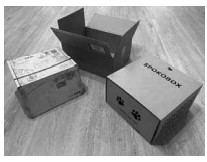
Figure 1: Packaging examples for the research – different level of personalisation
Source: Svobodová (2021)
The respondents were first asked to look at all the boxes, touch it, try to open it and examine it. They were then asked to rank the three packages from most attractive to least attractive according to their subjective opinion. The packaging personalised towards consumer was particularly interesting due to its interesting colour printing. When looking at this box, respondents often had associations of exoticism, travel and foreign countries. The Baby Boomer respondent found the packaging most attractive, particularly liking the bold print and appreciating the additional company information on the inside of the box.
The box personalised towards product was particularly successful with male respondents, who consistently found it the most attractive. However, the youngest Generation Z also rated the product personalised packaging as the most interesting. The laser-cut motifs were the most appealing to consumers and were repeatedly described as imaginative, unusual and modern. When respondents first saw the packaging, they often thought of associations with animals, i.e. goods for farmers.
The plain brown box was consistently identified as the least attractive by all respondents. This packaging was perceived by the respondents as classic postal or shipping box, which does not attract or offend and is only used for the transport and protection of the goods. Two respondents highlighted the ease of recycling when they first saw the packaging. The following charts illustrate how each generation perceives each shipping package separately.
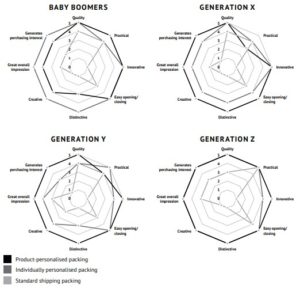
Figure 2: Evaluation of packaging types from a generational perspective
Source: Authors according to Svobodová (2021)
For the Baby Boomers respondent, the highest rated box was personalised towards consumer. Compared to the product-personalised box, this box made a better overall impression on the respondent, who described it as more creative and distinctive. The individually personalised packaging also showed the highest ability for this respondent to generate interest in purchasing from the e-shop. The following is an evaluation of Generation X. The most preferred packaging for this respondent was packaging containing product personalisation. This respondent rated this packaging highest in all aspects except practicality. Both of the remaining packages were rated as more practical. Both personalised packages were seen by the respondent as highly innovative and of high quality. The Millennial respondent, similar to the Generation X respondent, rated the product personalised the highest. The conventional clamshell box failed to generate purchase interest in this respondent. The representative of the youngest generation perceived personalised packaging as the same in almost all aspects. Hence, the respondent was attracted by both of these packages and ultimately chose the personalised product because of its finely cut motifs, which was described as modern and innovative. All three packages are equally practical according to the respondent.
The full results of how respondents ranked packaging according to its attractiveness are shown in the table below. Overall, respondents were most attracted to the product’s personalised packaging with laser-cut motifs of dog paws and bones.
| Generation | 1st | 2nd | 3rd |
|---|---|---|---|
| Baby Boomers | Package personalisation towards consumer | Package personalisation towards product | Standard shipping package |
| Generation X | Package personalisation towards product | Package personalisation towards consumer | Standard shipping package |
| Generation Y | Package personalisation towards product | Package personalisation towards consumer | Standard shipping package |
| Generation Z | Package personalisation towards product | Package personalisation towards consumer | Standard shipping package |
Table 1: Overall rating of packaging types
Source: Authors according to Svobodová (2021)
Overall, the best rated was the product-personalised packaging, followed by the individually packaging with the recipient’s name inscribed on it. Personalised boxes were perceived very positively by consumers in terms of creativity, expressiveness and innovation. Respondents saw all three packages as similarly practical. Although the personalised packaging was found to be of higher quality, the brown flap box did not lag far behind. This can be attributed to the fact that all three boxes were made of high quality corrugated cardboard to provide sufficient protection. One of the most important characteristics identified was the ability of the packaging to generate purchase interest. In this case, personalised boxes significantly outperformed plain box. This can be seen as an important indication that personalised packaging has an important impact on consumer behaviour.
Synthesis of interviews – respondents’ perception of packaging features
The first thematic area of the interviews tested consumer perceptions towards shipping packaging. All respondents agreed that they perceive shipping packaging primarily as a transporting and protecting factor. However, some of the respondents themselves acknowledged that they could imagine a situation where a nice personalised packaging becomes part of the product and can increase its value. None of the respondents had yet received goods in shipping packaging that had been personalised in some way. However, from the first reactions and the evaluation of the experiment itself, it was clear that the personalised packaging had attracted consumers and made a positive impression.
This is also evidenced by the answers of all respondents when asked whether they would find it more interesting to receive the goods in a nice personalised packaging or whether they do not care. All respondents agreed that if they could choose, they would prefer to receive the goods in a nice package. In this context, a respondent from the millennial generation also mentioned that he would regret recycling such a box immediately after use and would try to find another use for it. The Generation X consumer also acknowledged that personalised packaging is more interesting. But the main thing for them is still the fact that they will receive the goods in perfect condition. There was a consensus among all the respondents that the shipping packaging somehow represents the e-shop. Three respondents mentioned the fact that they perceived a nice personalised packaging as a nice bonus, as an added value to the shipment they ordered. One respondent mentioned that personalised packaging can be a possible way for an e-shop to gain more loyal customer. A similar consensus was observed for the statement that shipping packaging influences the image consumers have of an e-shop. Especially for more expensive goods and goods from well-known e-shops, consumers expect them to be packaged in boxes of sufficient quality.
All respondents consistently identified protection as the most important attribute of the shipping packaging. Furthermore, it was found that representatives of all ages do not take ecology lightly and therefore the materials used for the production of shipping packaging are important. Interestingly, the youngest Generation Z representative, who identified sustainability of the packaging material as the second most important attribute, also linked the attributes of added value and design with ecology. The respondent was very positive about the possibility of using the packaging for various other purposes, which to extend its life before recycling. According to this respondent, the design of the box is also related to the life extension. If the packaging has an interesting design, people like to reuse it. Consumers often talked about using boxes as containers for storing household items. Respondents also particularly highlighted the possibility of easy, quick and complete recycling of shipping packaging. A representative of the millennial generation admitted that if he could choose box made of more environmentally friendly material, he would even be willing to pay a certain amount extra.
Furthermore, respondents assessed the informative function of packaging. The most important information on the shipping packaging was the name and logo of the e-shop, which made it easy for respondents to know which parcel they were receiving and what it contained. For older generations, i.e. Baby Boomers and Generation X, the contact details of the e-shop on the packaging proved to be very important. On the other hand, for the two younger generations, this information on the shipping package is rather superfluous, as they can find the e-shop’s contact details on the Internet. Interesting findings were noticed in the area of consumer behaviour. Respondents agreed that the quality of the goods purchased is the most important factor when making a first purchase on an e-shop. Thus, if the quality of the goods is verified, all consumers acknowledged that a nice and good quality shipping packaging could influence them in their purchase. Respondents, one from the Baby Boomer generation and the other from Generation Z, agreed that in a situation where the same goods were offered by two different e-shops, they would choose the online shop that delivered the goods in nice and eco-friendly packaging. In addition, all respondents acknowledged that nice and good quality packaging that pleases the consumer can persuade them to buy from the e-shop again and thus become regular customers.
Respondents were also asked whether they would be willing to pay more money for personalised shipping packaging, for example in postage and packing fees. The representative of the oldest generation admitted that the packaging method was not so important to her that she would be not willing to pay extra. Similarly, the respondent representing Generation X could not say whether they would pay extra for shipping packaging in any case. However, he admitted that he would at least consider this option. Respondents from younger generations Y and Z did not hesitate and responded that they would be willing to pay extra for personalised packaging. In addition, the Generation Y representative expressed the idea that if the shopping basket included the option to wrap the goods in plain packaging for free and nice packaging with a dedication for an extra charge, he would definitely pay extra for more interesting packaging.
Conclusion
The goal of the paper is to find out consumers’ attitudes towards the marketing usage of shipping packaging. The qualitative research took the form of experiment evaluated using semantic differentials and interviews. Personalised shipping boxes were evaluated as innovative, attractive, distinctive and practical at the same time. It was found that those packages that are personalised in some way have a significantly greater ability to generate consumer purchase interest. The interviews revealed respondents’ attitudes towards shipping packaging and most important packaging features. The results showed that consumers perceive shipping packaging mostly in a mean of transporting and protecting the product. The most important attributes of transport packaging were identified as protection and the material used in relation to sustainability. The last important conclusion that was obtained through interviews was that personalised shipping packaging shows an influence on consumption behaviour. In particular, sophisticated shipping packaging can be a reason for repetition of purchases. The research also showed that product personalisation is more interesting for the respondents. On the other hand, the individual form of personalisation did not appeal much to respondents. This could be a first indication that e-shops do not necessarily need to invest time and costs in introducing individual personalisation, as it is quite sufficient for consumers if the packaging is personalised towards the product. Consumers’ attitudes towards personalisation of shipping packaging proved to be very positive. Respondents were willing to pay an extra fee for good quality and interesting packaging in some cases, or acknowledged its influence on repetitive purchases. These results are important not only for packaging solutions manufacturers, but also for sellers (e-shops) themselves.
Literatúra/List of References
- Ahmed, R., Parmar, V. and Amin, M., 2014. Impact of product packaging on consumer’s buying behavior. In: European Journal of Scientific Research. 2014, 122(2), 125-134. ISSN 1450-216X. [online]. [cit. 2022-4-6]. Available at: <DOI 10.13140/2.1.2343.4885>
- Alhamdi, F., 2020. Role of packaging in consumer buying behavior. In: Management Science Letters. 2020, 10, 1191-1196. ISSN 1923-9343. [online]. [cit. 2022-4-6]. Available at: <DOI 10.5267/j.msl.2019.11.040>
- Ambrose, G. and Harris, P., 2018. Packaging the brand: the relationship between packaging design and brand identity. Lausanne: AVA Publishing SA, 2018. ISBN 978-1-350-09651-6. [online]. [cit. 2022-4-6]. Available at: <https://doi.org/10.5040/9781350096516?locatt=label:secondary_bloomsburyAppliedVisualArts>
- Babu, V. R. and Arunraj, A., 2019. Fashion marketing management. Woodhead Publishing India, 2019. ISBN 978-81-936446-1-4. [online]. [cit. 2022-4-7]. Available at: <https://search.ebscohost.com/login.aspx?direct=true&scope=site&db=nlebk&db=nlabk&AN=2227810>
- Broučková, I., Jaderná, E. and Srbová, A., 2019. Promotion of products in retro-designed packaging. In: Marketing Science & Inspirations. 2019, 14(1), 12-22. ISSN 1338-7944.
- Calder, B., 2022. Customer interaction strategy, brand purpose and brand communities. In: Journal of Service Management. 2022. ISSN 1757-5818. [online]. [cit. 2022-4-7]. Available at: <DOI 10.1108/JOSM-11-2021-0410>
- Dawes, J., 2016. Brand growth in packaged goods markets: Ten cases with common patterns: Brand growth in packaged goods markets. In: Journal of Consumer Behaviour. 2016, 15(5), 475-489. ISSN 1479-1838. [online]. [cit. 2022-4-7]. Available at: <DOI 10.1002/cb.1595>
- Dayan, N. and Kromidas, L., 2011. Formulating, packaging, and marketing of natural cosmetic products dayan/formulating cosmetics. Hoboken, NJ, USA: John Wiley & Sons, Inc., 2011. ISBN 978-1-118-05680-6.
- Deliya, M. and Parmar, B., 2012. Role of packaging on consumer buying behavior –Patan district. In: Global Journal of Management and Business Research. 2012, 12(10), 48-68. ISSN 2249-4588.
- Deloitte LLP, 2019. Made-to-order: The rise of mass personalization. The Deloitte Consumer Review. 2019. [online]. [cit. 2022-4-7]. Available at: <ch-en-consumer-business-made-to-order-consumer-review.pdf>
- Dočkal, M., 2019. Personalizace sílí s generační obměnou. In: Packaging Herald. 2019, 25(9-10), 60-61. ISSN 2336‑8926. [online]. [cit. 2022-4-7]. Available at: <https://www.packagingherald.cz//wp-content/uploads/2019/10/Packaging_Herald_25.pdf>
- Emblem, A. and EMBLEM, H., 2021. Packaging technology: fundamentals, materials and processes. Oxford, Cambridge, Philadelphia, New Delhi: Woodhead Publishing, 2021. ISBN 978-1-84569-665-8.
- Escursell, S., Llorach-Massana, P. and Roncero, M. B., 2020. Sustainability in e-commerce packaging: A review. In: Journal of Cleaner Production. 2020, 280. ISSN 0959-6526. [online]. [cit. 2022-4-7]. Available at: <DOI 10.1016/j.jclepro.2020.124314>
- Fang, S., Zhang, W. and Huang, B., 2014. Development of logistics in electronic commerce. Atlantis Press, 2014. ISBN 978-94-91216-41-1. [online]. [cit. 2022-4-7]. Available at: <DOI 10.2991/iccia.2012.284>
- Farmer, N., 2012. Packaging and marketing. In: Ed. Emblem, A., Packaging technology. Fundamentals, materials and processes. p. 87-105. ISBN 978-1-84569-665-8.
- García-Arca, J., Gonzalez-Portela Garrido, A. T. and Prado, P., 2017. Sustainable packaging logistics. The link between sustainability and competitiveness in supply chains. In: Sustainability. 2017, 9(7), 1098. ISSN 2071-1050. [online]. [cit. 2022-4-7]. Available at: <DOI 10.3390/su9071098>
- Gryshchenko, I., Chubukova, O., Bilovodska, O., Gryshchenko, O. and Melnyk, Y., 2020. Marketing-oriented approach to evaluating the strategy of distribution management for innovative products in logistics. In: WSEAS transactions on environment and development. 2020, 16, 371-383. ISSN 2224-3496. [online]. [cit. 2022-4-7]. Available at: <DOI 10.37394/232015.2020.16.37>
- Jaderná, E., Srbová, A. and Broučková, I., 2017. Rozdíly ve vnímání retroobalů a současných obalů. In: Marketing Science & Inspirations. 2017. 12(4), 2-9. ISSN 1338-7944.
- Jaderná, E. and Volfová, H., 2020. Consumers´ perception of sustainable retailers. In: Marketing Science & Inspirations. 2020. 15(4), 13-26. ISSN 1338-7944.
- Khan, M., Waheed, S. and Ahmad, N., 2018. Product packaging and consumer purchase intentions. In: Market Forces: College of Management Sciences. 2018, 13(2), 97-114. ISSN 2309-866X.
- Kotler, Ph., Keller, K. L. and Chernev, A., 2022. Marketing management. Pearson, 2022. ISBN 978-0-13-588715-8.
- Lekovic, S. and Milicevic, N., 2013. The importance and characteristics of logistics in electronic commerce. In: 1st Logistics International Conference. Belgrade, Serbia, 2013. [online]. [cit. 2022-4-7]. Available at: <http://logic.sf.bg.ac.rs/wp-content/uploads/Papers/ID-17.pdf>
- Mahmoudi, M. and Parviziomran, I., 2020. Reusable packaging in supply chains: A review of environmental and economic impacts, logistics system designs, and operations management. In: International Journal of Production Economics. 2020, 228, p. 107730. ISSN 0925-5273. [online]. [cit. 2022-4-7]. Available at: <DOI 10.1016/j.ijpe.2020.107730>
- McCrindle, M., Wolfinger, E. and Salt, B., 2014. The ABC of XYZ: understanding the global generations. Australia: SW Press. ISBN 978-1-74223-035-1.
- Rowan, M., 2020. Key challenges with personalized marketing and how to overcome them. In: Forbes. 2020. [online]. [cit. 2022-4-7]. Available at: <https://www.forbes.com/sites/forbesagencycouncil/2020/02/11/key-challenges-with-personalized-marketing-and-how-to-overcome-them/?sh=415bddf26018>
- Rundh, B., 2013. Linking packaging to marketing: How packaging is influencing the marketing strategy. In: British Food Journal. 2013, 115(11), 1547-1563. ISSN 0007-070X. [online]. [cit. 2022-4-7]. Available at: <DOI 10.1108/BFJ-12-2011-0297>
- Rundh, B., 2016. The role of packaging within marketing and value creation. In: British Food Journal. 2016, 118(10), 2491-2511. ISSN 0007-070X. [online]. [cit. 2022-4-7]. Available at: <DOI 10.1108/BFJ-10-2015-0390>
- Şener, A., Kinaci, B. and Doğan, N., 2015. The influence of packaging elements on the consumer purchase decision. In: International Journal of Multidisciplinary Thought. 2015, 5, 87-98. ISSN 2156-6992.
- Sharma, H., Singh, D., Agariya, A. and Johri, A., 2012. The role of packaging in brand communication. In: International Journal of Scientific and Engineering Research. 2012, 3(2). ISSN 2229-5518.
- Smolka, S., Smolková, E. and Vilčeková, L., 2021. Sustainability as factor of marketing strategies in Slovakia. In: Marketing Science & Inspirations. 2021, 16(3), 2-12. ISSN 1338-7944.
- Svobodová, E., 2021. Personalizované přepravní obaly a jejich využití v marketingu. Diplomová práce. Mladá Boleslav: ŠKODA AUTO Vysoká škola, 2021.
Kľúčové slová/Key words
marketing, brand, consumer, design, distribution, package, packaging, personalisation, promotion
marketing, značka, zákazník, design, distribuce, obal, balení, personalizace, propagace
JEL klasifikácia/JEL Classification
M31, M37
Résumé
Marketingový potenciál personalisovaných přepravních obalů
Cílem článku je zhodnotit postoj spotřebitelů k marketingovému využití přepravních obalů. S rostoucím významem elektronického obchodování hledají maloobchodníci nové způsoby, jak zaujmout spotřebitele. Zatímco marketingový význam spotřebitelských obalů je již dlouho znám a popsán, je třeba prozkoumat také design a funkci obalů přepravních.
V rámci tohoto článku byl proveden kvalitativní výzkum (kombinace experimentu a řízeného rozhovoru) s cílem prozkoumat rozdíly v personalizaci přepravních obalů podle různých věkových kohort, a také najít kritické atributy přepravních obalů pro spotřebitele. Výzkum prokázal skutečný potenciál personalizace přepravních obalů. Díky tomu je možné pozorovat změny v chování spotřebitelů, které vedou mimo jiné k jejich větší spokojenosti, tendenci k opakovaným nákupům nebo ochotě připlatit si za personalizovaný obal.
Recenzované/Reviewed
25. April 2022 / 10. May 2022