



1 Introduction
Marketing communication plays a crucial role in modern cultural tourism by ensuring the visibility, competitiveness, and sustainability of heritage sites. Castles and châteaux, as symbolic symbols of national history and cultural identity, are no longer simply places for conserving historical memory but active institutions that must engage with diverse groups of visitors. The swift digital transformation of recent decades has fundamentally altered how cultural organisations develop and execute their communication strategies, compelling them to blend traditional methods with innovative, data-driven, and interactive solutions.
Professional literature highlights that heritage institutions can no longer depend solely on their symbolic or cultural significance. Instead, they must actively shape their image and public engagement strategies to stay relevant in an increasingly competitive tourism environment. In this context, marketing management is seen as the craft and science of selecting target audiences, fostering relationships with visitors, and effectively communicating value (Butkouskaya et al. 2024; Xiao et al. 2024). For heritage sites, this involves not only offering a quality programme but also knowing how to communicate it to the target audience in a way that fosters trust, engagement, and long-term loyalty among visitors.
At the same time, it seems that the aims of marketing communication in cultural tourism extend beyond purely economic measures such as sales or visitor numbers. Strategic aims related to the institution’s image, increasing awareness, visitor satisfaction, and enhancing educational and social functions also hold significant importance. A multidimensional approach underlines the value of integrated communication strategies that both support the cultural mission of heritage sites and ensure their economic sustainability (Mele, Filieri and Decarlo 2023).
The main objective of the article is to analyse and optimise marketing communication processes in selected heritage institutions, with an emphasis on identifying strategies that promote visitor engagement and long-term development of the target audience.
2 Literature review
Marketing communication is a vital element of the success of heritage sites (Arrigo, Liberati and Mariani 2021). Its importance has increased significantly in recent decades as heritage institutions face a growing need to reach wider audiences, boost their visibility, and adapt to changing visitor behaviours (Liu, Wu and Wang 2020). It is no longer enough for heritage sites to rely solely on their historical or cultural significance (Royle and Laing 2013). Today, it is essential that they actively manage the image they project externally (Parameswaran 2023). This approach aligns with the ideas of Butkouskaya et al. (2024), who argue that marketing management is the art and science of choosing target groups, establishing and developing relationships with customers through the creation, delivery, and communication of value (Xiao et al. 2024). In the context of heritage sites, this involves not only providing a high-quality programme but also knowing how to communicate it effectively and present it to a specific audience of visitors in a way that stimulates their interest and builds trust (Akgün, Keskin and Ayar 2014). Management has a variety of tools at its disposal, from traditional advertising to public relations and digital marketing to analytical methods (Liu, et al. 2018), enabling precise measurement of the reach and effectiveness of individual activities (Pauwels, Aksehirli and Lackman 2016).
An important part of planning involves setting marketing communication goals (Kilichov and Olšavský 2023). These should be clearly defined, measurable, and aligned with the organisation’s strategic direction (Pisula, Florek and Homski 2023). The effectiveness of marketing communication is then evaluated based on whether these goals are achieved. As Patil and Szocs (2024) highlight, communication goals do not necessarily have to be purely economic, such as increasing revenue, visitor numbers, or souvenir sales (Marisova and Smolkova 2020). Goals related to the organisation’s image, public awareness, visitor satisfaction, or fostering long-term relationships with the community are equally vital (Lukáč and Matušíková 2022). For example, a heritage site might decide to communicate specifically with schools and families with children (Kováříková, Dzilská and Pollák 2025). The campaign’s aim may not be to boost sales immediately but to develop relationships with young audiences and their parents, enhance the educational role of the site, and increase its social significance in the long run (Mele, Filieri and Decarlo 2023). Though the results of this strategy may not be immediately visible, over time, they can substantially contribute to the organisation’s stability and sustainability (Dwivedi 2020). From this, it is clear that effective marketing communication is a vital element in managing heritage sites (Köves and Király 2021). It not only helps meet visitor quotas but also plays a crucial role in cultivating cultural value, enhancing perceptions of quality, and strengthening relations with the public (Hu and Luo 2024).
3 Methodology
The study focuses on employees at four heritage sites. Participation requires consent to be interviewed, active involvement at the site, and anonymity. Semi-structured interviews are conducted with employees who hold decision-making or managerial roles within the institutions under examination. These primarily include directors, castellan, marketing managers, and PR specialists, or individuals directly responsible for marketing decisions, collectively referred to as marketing managers in the text. Respondents are approached individually, either face-to-face, by telephone, or via e-mail. The interviews follow a pre-prepared script, with all participants spending roughly the same amount of time on the discussion. The main aim is to gather answers to key research questions, such as whether a visitor database exists and how it is used in visitor analysis in line with selection and profiling theories. Additionally, the study explores whether specific marketing campaign objectives are set within the facilities, if communication effectiveness is evaluated, how the target market is identified and analysed, what messages are conveyed to visitors, and which communication channels are employed for this purpose.
The research examines institutions classified as historical monuments, specifically castles and chateaux situated in the Visegrad Group countries (Slovakia, the Czech Republic, Hungary and Poland). These are highly appealing cultural destinations attracting both domestic and international visitors. The main criterion for selection was the availability of relevant and secondary data. From a comparative perspective, the analysed sites share several characteristics: a similar number of employees, comparable organisational structures, significant roles in national history and identity, roughly comparable seasonal visitor numbers, exhibitions focused on history and architecture, and usage of websites, social media, and other digital platforms for public engagement. The differences among the sites primarily lie in how marketing communication is managed. Various management approaches and methodological procedures are employed, affecting marketing strategies and communication activities aimed at visitors. To ensure data confidentiality, management required anonymity for participation, leading to the sites being referred to neutrally in the text as Object I. – IV. This requirement stems from the fact that the research involves sensitive information regarding internal management mechanisms, decision-making processes, and communication strategy effectiveness. Anonymity also encourages more open responses from participants and enhances the objectivity and credibility of the data collected.
This research has several limitations that should be acknowledged. First, the empirical data were collected from a limited number of heritage sites located in the Visegrad Group countries. Although these sites share similar characteristics, the findings cannot be fully generalised to all cultural tourism institutions in different geopolitical or socio-economic contexts. Second, the study primarily relies on qualitative semi-structured interviews with marketing managers. While this method offers in-depth insights, it may also be influenced by respondents’ subjective perceptions and institutional priorities. Third, the research mainly concentrates on managerial perspectives and does not include extensive quantitative data from visitors, which could provide a more balanced understanding of communication effectiveness. Additionally, the study reflects a specific period, and marketing communication strategies may evolve over time due to technological advancements and changing visitor behaviour. Finally, language adaptation and multilingual strategies were examined only at a descriptive level, leaving room for future quantitative analysis of their impact on international visitors engagement.
4 Results
Adapting marketing communication to target groups is a key factor in effective marketing for cultural sites. The analysis shows that the sites examined tailor their communication strategies based on their visitors’ structure, with notable differences in the use of modern digital tools and personalisation. While some sites focus on visually engaging communication and active use of social media, others rely more on traditional channels such as websites, printed materials, and collaborations with regional institutions. A shared trend is the effort to increase interactivity and broaden offerings for families and school groups, which are crucial for visitor growth. The findings also suggest that ensuring the sustainability of marketing communication in the cultural tourism sector requires more systematic adaptation to international visitors through multilingual services and digital content, which can greatly boost competitiveness in the global market.
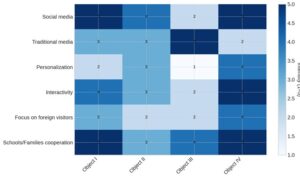
Figure 1: Adaptation of marketing communication of target groups
Source: authors
Object I. mainly focuses on communication through social networks and regional media. Marketing depends on a strong visual identity and event planning that mainly appeals to young visitors. Personalised communication is currently in the pilot stage and being tested via a newsletter. Managers report successful cooperation with schools, which has led to a 25% increase in visitor numbers. Interactivity is growing through QR codes and touch screens. The facility is also developing a multilingual audio guide, an important step towards attracting foreign tourists.
In Object II., targeted activities include events and competitions on social networks, with the visual quality of the campaigns receiving positive reviews. Communication methods are flexible, adapting to current needs and budget constraints. Remarketing via Google Ads is being tested, but results are still unclear. The Object plans to offer educational programmes and introduce digital games for children, aiming to reach families. Regarding communication with the professional public, they intend to collaborate with universities. The challenge remains to sustain interest outside the main season.
Object III. focuses less on social media, relying primarily on websites and printed materials in tourist centres. Interaction with schools and local museums helps to target specific groups, such as students or experts. Interactive elements are being gradually introduced. A mobile app with educational content is planned. Personalised emails are not yet used, but management is contemplating testing them. Communication mainly targets the domestic market, with only marginal outreach to foreign audiences.
Object IV. employs modern, dynamic methods such as live broadcasts via social networks, personalised email invitations, and interactive zones. Communication is highly visual, focusing on originality and experience, to attract a broad audience, including families. Digital tools help improve visitor management. The facility aims to become a year-round attraction, which requires diverse communication strategies and systematic outreach to new target groups.
The data obtained indicates that all facilities tailor their marketing communication to some degree based on the nature of their visitors, with a strong emphasis on the domestic market. Objects I. and IV. actively collaborate with schools and families, while Object III. targets middle-aged men and employs more traditional tools. Object II. adopts an approach that balances modern methods with traditional media. There is also a notable difference in which communication channels motivate visitors to return. Object I. benefits most from social media and offline communication, while Objects II. and IV. utilise a variety of forms, with visitors also valuing personal contact and the uniqueness of the offer. The data demonstrates that communication strategies that are more personalised, visually appealing, and interactive can effectively reach different target groups. Simultaneously, there is a need for greater adaptation to foreign audiences, for example through multilingual services and accessible digital content.
5 Discussion
Research conducted at Objects I. – IV. demonstrates that the brand identity of the heritage site is not sufficiently established in the wider region, and visits are often random rather than targeted. Many respondents stated that they learned about the buildings indirectly, and only a minority perceive the building as part of the region’s permanent cultural infrastructure. Therefore, another proposal involves creating an offline publishing platform and organising a public event with a market character, which would take place directly on the monument’s premises. The aim is to develop a local brand for the site through regular communication with the public, based on the stories, traditions, and values it represents.
The main pillar is the launch of a printed magazine called „Voice of History“, which would be published twice a year. Its content would include historical articles, interviews with prominent regional figures, invitations to forthcoming events, behind-the-scenes insights, and visitor experiences. The magazine would be distributed to regional schools, libraries, cultural centres, and municipal facilities, ensuring a broad reach even outside the online space.
At the same time, two themed weekend markets will be organised each year, focusing on crafts, folklore, food, and cultural performances. The goal is not only to sell goods but also to foster a cultural atmosphere and re-establish the historic building as a vibrant public space. Additionally, we propose introducing collectible tickets and postcards featuring original artwork, which would serve both practical and souvenir purposes. These items would help strengthen visitors’ memories or act as presentation pieces. Organising these activities requires professional and editorial support, which is why the proposal includes funding for a coordinator and a team of editors responsible for the magazine’s quality and the markets’ dramaturgy. The total budget for the proposal is approximately €5,600.
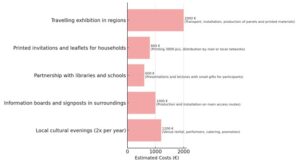
Note: The costs were established through an indicative market survey, publicly available price lists, consultations with experts, and comparisons with similar projects in the cultural tourism sector.
Figure 2: Proposed communication activities and their cost
Source: authors
The proposal strengthens the view of Objects I. – IV. as part of regional cultural identity and also establishes a unique offline channel to communicate the value and experience associated with visiting. By combining a printed publication with a public cultural space, the object becomes an active community element, not just a passive destination.
6 Conclusion
The research results confirm that effective marketing communication is essential for the sustainability and competitiveness of heritage sites in the cultural tourism sector. The castles and chateaux examined in the V4 countries display common features in terms of organisational structure and focus on the domestic market, but they differ considerably in how they implement communication strategies. While some sites heavily utilise social media, interactivity, and personalised communication methods, others remain more reliant on traditional channels and local collaboration.
The research indicated that visual appeal, personalisation, and interactive tools have the greatest potential to foster visitor loyalty and encourage repeat visits. Simultaneously, it has been identified that a significant weakness is the limited focus on foreign tourists, which could hinder the long-term growth and internationalisation of heritage sites. This highlights the need for more systematic adaptation through multilingual services, digital content, and innovative communication methods that extend beyond traditional approaches. The article also offers recommendations for managing heritage institutions, which can serve as a foundation for developing comprehensive and integrated communication strategies. Their implementation will not only enhance the standing of the sites studied within the domestic context, but also boost their appeal in the international cultural tourism market.
Poznámky/Notes
This research was “Funded by the EU NextGenerationEU trough the Recovery and Resilience Plan for Slovakia under the project No. 09I03-03-V05-00004”.
This research was funded by VEGA No. 1/0474/23 – „Diagnostic audit in heritage objects management on the background of social and economic processes“.
Literatúra/List of References
- Akgün, A. E., Keskin, H. and Ayar, H., 2014. Standardization and adaptation of International Marketing Mix Activities: A case study. In: Procedia – Social and Behavioral Sciences. 2014, 150, 609-618. ISSN 1877-0428. Available at: <https://doi.org/10.1016/j.sbspro.2014.09.080>
- Arrigo, E., Liberati, C. and Mariani, P., 2021. Social media data and users preferences: A statistical analysis to support marketing communication. In: Big Data Research. 2021, 24, 100189. ISSN 2214-580X. Available at: <https://doi.org/10.1016/j.bdr.2021.100189>
- Butkouskaya, V., Llonch-Andreu, J. and Alarcón-Del-Amo, M. D. C., 2024. Market orientation, integrated marketing communications, and small and medium-sized enterprises (SMEs) performance: A comparison between developed and developing economies. In: European Research on Management and Business Economics. 2024, 30(3), 100260. ISSN 2444-8842. Available at: <https://doi.org/10.1016/j.iedeen.2024.100260>
- Dwivedi, Y. K. et al., 2020. Setting the future of digital and social media marketing research: Perspectives and research propositions. In: International Journal of Information Management. 2020, 59, 102168. ISSN 1873-4707. Available at: <https://doi.org/10.1016/j.ijinfomgt.2020.102168>
- Hu, G. and Luo, R., 2024. Media communication marketing data analysis based on artificial intelligence. In: Procedia Computer Science. 2024, 247, 382-388. ISSN 1877-0509. Available at: <https://doi.org/10.1016/j.procs.2024.10.045>
- Kilichov, M. and Olšavský, F., 2023. Sustainable tourism development: Insights from accommodation facilities in Bukhara along the silk road. In: Marketing Science & Inspirations. 2023, 18(2), 12-25. ISSN 1338-7944. Available at: <https://doi.org/10.46286/msi.2023.18.2.2>
- Kováříková, V., Dzilská, Z. and Pollák, F., 2025. Effective marketing mix of a manufacturing company in the context of sustainability and competitiveness. Marketing Science & Inspirations. 2025, 20(1), 19-32. ISSN 1338-7944. Available at: <https://doi.org/10.46286/msi.2025.20.1.3>
- Köves, A. and Király, G., 2021. Inner drives: Is the future of marketing communications more sustainable when using backcasting? In: Futures. 2021, 130, 102755. ISSN 1873-6378. Available at: <https://doi.org/10.1016/j.futures.2021.102755>
- Liu, S. Q., Wu, L. L. and Wang, C. Y., 2020. A creative-mix or variety-mix fusion experience? Examining marketing strategies for ethnic fusion restaurants. In: International Journal of Hospitality Management. 2020, 89, 102596. ISSN 1873-4693. Available at: <https://doi.org/10.1016/j.ijhm.2020.102596>
- Liu, Y. et al., 2018. A statistical approach to participant selection in location-based social networks for offline event marketing. In: Information Sciences. 2018, 480, 90-108. ISSN 1872-6291. Available at: <https://doi.org/10.1016/j.ins.2018.12.028>
- Lukáč, M. and Matušíková, D., 2022. Manažment kultúrneho dedičstva. Trnava: Univerzita sv. Cyrila a Metoda, 2022. ISBN 978‑80‑572‑0290‑5.
- Marisova, B. and Smolkova, E., 2020. Role of regional tourism organizations in Slovakia from their perspective. In: Marketing Science & Inspirations. 2020, 15(2), 2-9. ISSN 1338-7944.
- Mele, E., Filieri, R. and De Carlo, M., 2023. Pictures of a crisis. Destination marketing organizations. Instagram communication before and during a global health crisis. In: Journal of Business Research. 2023, 163, 113931. ISSN 1873-7978. Available at: <https://doi.org/10.1016/j.jbusres.2023.113931>
- Parameswaran, A. M. G., 2023. Integrated marketing communication on health-related consumer behavior. In: Ghosh, D., Bogueva, D. and Smarta, R. (Eds.), 2023. Nutrition Science, Marketing Nutrition, Health Claims, and Public Policy. 59-70. ISBN 978-0-323-85615-7. Available at: <https://doi.org/10.1016/b978-0-323-85615-7.00026-4>
- Patil, R. K. and Szocs, C., 2024. Effects of bitten food images in marketing communications. In: Appetite. 2024, 200, 107566. ISSN 1095-8304. Available at: <https://doi.org/10.1016/j.appet.2024.107566>
- Pauwels, K., Aksehirli, Z. and Lackman, A., 2016. Like the ad or the brand? Marketing stimulates different electronic word-of-mouth content to drive online and offline performance. In: International Journal of Research in Marketing. 2016, 33(3), 639-655. ISSN 1873-8001. Available at: <https://doi.org/10.1016/j.ijresmar.2016.01.005>
- Pisula, E., Florek, M. and Homski, K., 2023. Marketing communication via geocaching. When and how it can be effective for places? In: Journal of Outdoor Recreation and Tourism. 2023, 42, 100622. ISSN 2213-0799. Available at: <https://doi.org/10.1016/j.jort.2023.100622>
- Royle, J. and Laing, A., 2013. The digital marketing skills gap: Developing a digital marketer model for the communication industries. In: International Journal of Information Management. 2013, 34(2), 65-73. ISSN 1873-4707. Available at: <https://doi.org/10.1016/j.ijinfomgt.2013.11.008>
- Xiao, J. et al., 2024. Optimising allocation of marketing resources among offline channel retailers: A bi-clustering-based model. In: Journal of Business Research. 2024, 186, 114914. ISSN 1873-7978. Available at: <https://doi.org/10.1016/j.jbusres.2024.114914>
Kľúčové slová/Key words
visitor engagement, digital communication, tourism, heritage, audience segmentation
zapojenie návštevníkov, digitálna komunikácia, turizmus, kultúrne dedičstvo, segmentácia publika
JEL klasifikácia/JEL Classification
H11, H79, M12, M31
Résumé
Optimalizácia procesov marketingovej komunikácie v kultúrnom turizme
Marketingová komunikácia sa stáva rozhodujúcim faktorom konkurencieschopnosti a udržateľnosti pamiatkových objektov. Hlavným cieľom článku je analyzovať a optimalizovať procesy marketingovej komunikácie vo vybraných pamiatkových inštitúciách s dôrazom na identifikáciu stratégií, ktoré podporujú angažovanosť návštevníkov a dlhodobý rozvoj cieľového publika. Výskum je postavený na kvalitatívnom prístupe prostredníctvom pološtruktúrovaných rozhovorov s manažérmi zodpovednými za komunikačné procesy. Výsledky poukazujú na výrazné rozdiely v miere personalizácie, interaktivity a využívania digitálnych nástrojov medzi skúmanými objektmi. Kým niektoré inštitúcie sa opierajú najmä o sociálne médiá a interaktívne formáty, iné zostávajú orientované na tradičné kanály a lokálnu spoluprácu. Analýza zároveň ukazuje, že stratégie založené na vizuálnej atraktivite, personalizácii a interaktívnej komunikácii efektívnejšie podporujú lojalitu a opakovanú návštevnosť. Súčasne sa identifikovala nedostatočná adaptácia na zahraničné publikum, čo poukazuje na potrebu viacjazyčných služieb a prístupného digitálneho obsahu. Článok prináša odporúčania na zlepšenie riadenia marketingovej komunikácie s cieľom zvýšiť konkurencieschopnosť a zabezpečiť udržateľné postavenie pamiatkových objektov na medzinárodnom trhu kultúrneho turizmu.
Recenzované/Reviewed
11. September 2025 / 29. September 2025